Exploring the Neural Overlaps: Brain Waves in Monks' Meditation vs. 5-MeO-DMT Experiences
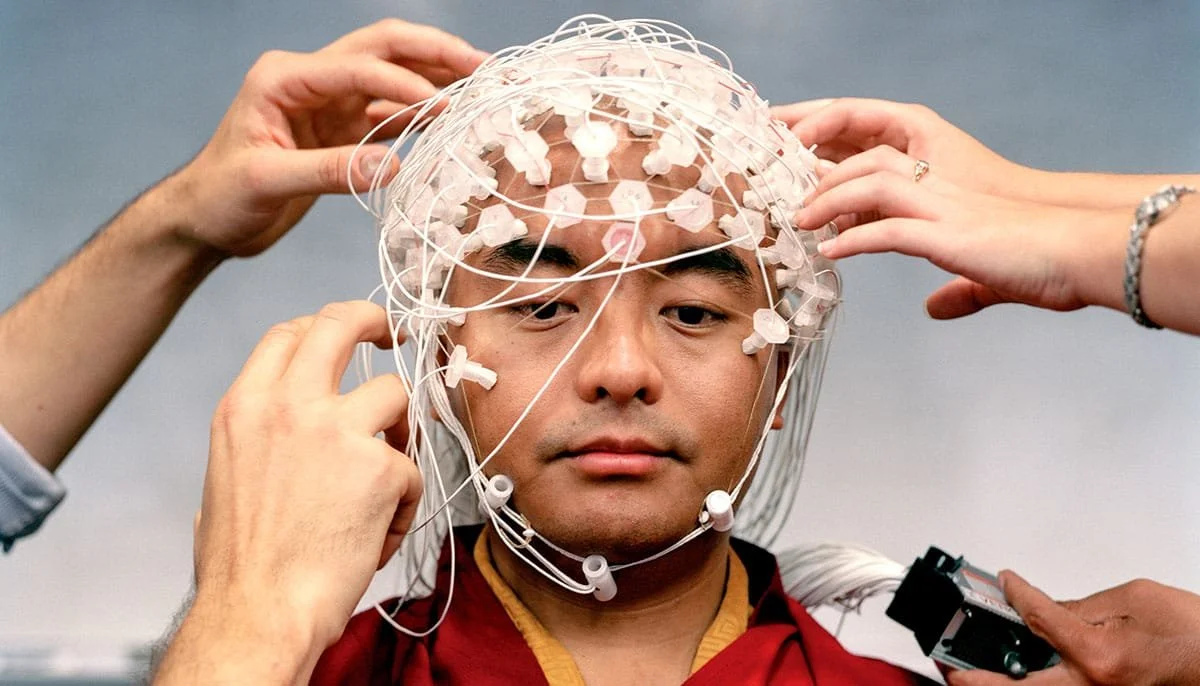
Brain Waves Under 5-MeO-DMT
On the psychedelic side, 5-MeO-DMT stands out for its intensity and brevity, often called the "God molecule" for evoking mystical states. A recent observational study examined its effects in naturalistic settings, using EEG to track brain activity before and after inhalation. Participants experienced a global reduction in alpha power, indicating disrupted top-down cognitive models like self-perception, alongside decreases in beta waves in posterior brain areas. These changes correlate with phenomenological reports of self-dissolution, immersion in abstract realms, or a paradoxical "everything/nothing" state where distinctions vanish but awareness remains.
Interestingly, the study notes variability: higher doses led to more profound ego loss but also amnesia, complicating recalls. Unlike slower-building psychedelics like psilocybin, 5-MeO-DMT's effects peak rapidly, lasting 15-30 minutes, with an afterglow resembling meditative clarity.
Drawing Comparisons: Overlaps and Insights
Though direct head-to-head experiments are scarce—due to ethical and logistical challenges—researchers increasingly view 5-MeO-DMT as a pharmacological shortcut to states akin to advanced meditation. Both conditions show reduced alpha and beta power, which may underpin the shared experience of nonduality and minimal self-awareness. For instance, the alpha suppression in 5-MeO-DMT mirrors the decreased internal dialogue in monks' meditation, while the potential for gamma synchrony in both could explain heightened unity.
Phenomenologically, overlaps include timelessness, reduced sensory labelling, and a deconstructed sense of self. However, meditation requires years of practice for reliability, whereas 5-MeO-DMT offers accessibility but with risks like intense disorientation. This makes psychedelics valuable tools for studying consciousness, potentially informing therapies for mental health issues tied to rigid self-concepts, such as depression.
Final Thoughts
The brain's plasticity shines through in these studies, showing how disparate paths—discipline or chemistry—can converge on similar neural landscapes. As research evolves, perhaps we'll see controlled trials bridging these worlds more directly. Until then, whether through a monk's mindful breath or a psychedelic journey, the pursuit of inner peace reveals the mind's boundless potential. If you're intrigued, always approach such topics with caution and consult professionals for any exploratory steps.