Understanding Non-Dualism: The Essence of Oneness Beyond Separation
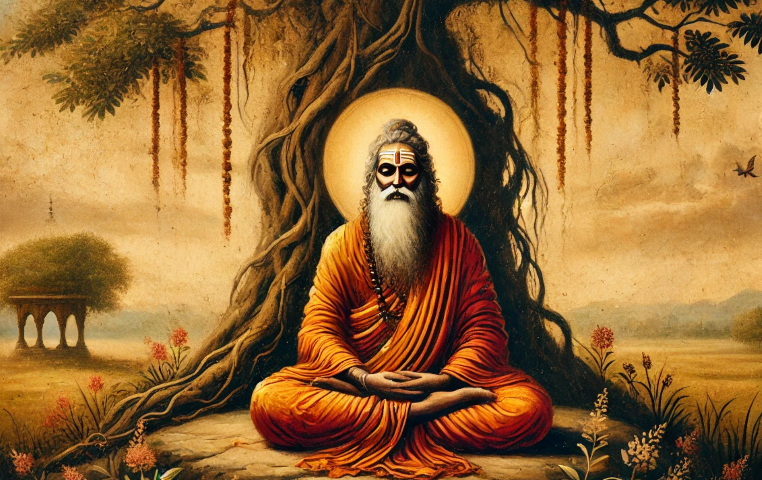
n a world that often feels fragmented—divided by borders, beliefs, opinions, and even our own thoughts—the concept of non-dualism offers a profound alternative. Derived from the Sanskrit word advaita meaning "not two," non-dualism points to a fundamental reality where distinctions like self/other, subject/object, or even divine/human dissolve into pure unity. It's not just a philosophy; it's an experiential insight into the nature of existence.
Roots in Ancient Traditions
Non-dualism is most famously associated with Advaita Vedanta, a school of Hindu philosophy systematized by the 8th-century sage Adi Shankara. In Advaita, the ultimate reality (Brahman) is one undivided consciousness. The individual self (Atman) is not separate from this Brahman—it's identical. The famous Upanishadic declaration "Tat Tvam Asi" ("Thou art That") encapsulates this: you are not apart from the divine whole.
The world we perceive as separate and diverse is seen as maya (illusion), not ultimately real but an appearance overlaying the singular truth.
Advaita Vedanta: Non-Dual Wisdom of the Upanishads
Similar ideas echo across traditions. In Zen Buddhism and Mahayana schools, non-duality transcends concepts like emptiness (shunyata) and the inseparability of samsara (worldly existence) and nirvana. Taoism reflects it in the interplay of yin and yang—opposites that are interdependent, forming a unified whole.
Advaita, Zen, Dzogchen and Taoism
A classic metaphor is the wave and the ocean: the wave appears separate, rising and falling, but it's never apart from the ocean. Your sense of "I" is like the wave—temporary and illusory—while the ocean is the boundless awareness.
Experiencing Non-Duality Today
In modern spirituality, non-dualism has surged in popularity, blending ancient wisdom with contemporary practices. Teachers like Eckhart Tolle, Rupert Spira, and Mooji emphasize direct pointing to this ever-present awareness, beyond the thinking mind.
Deep meditation, particularly in traditions like Dzogchen or Zen, can reveal non-dual states—pure presence without a separate observer.
Interestingly, psychedelics like psilocybin or 5-MeO-DMT often induce temporary non-dual experiences: ego dissolution, boundless unity, and a glimpse of interconnected reality. Research shows these can shift metaphysical beliefs toward non-physicalist views, fostering lasting feelings of oneness and well-being.
Yet, traditions caution that such glimpses, while powerful, are often transient without integration through ongoing practice.
Why It Matters
Living from a non-dual perspective reduces suffering born of separation—fear, conflict, and grasping. It fosters compassion, as harming "another" is seen as impossible in true oneness. In a divided world, this insight feels more relevant than ever.
Non-dualism isn't about denying the relative world of forms and differences; it's recognizing that, at the deepest level, there's no ultimate division.
Final Reflections
Whether through inquiry ("Who am I?"), silent meditation, or life's spontaneous awakenings, non-dualism invites us to rest in the simplicity of being. It's not something to achieve but to recognize as already here. If this resonates, explore the teachings—start with a quiet moment of awareness. The truth of "not two" awaits discovery in your own experience.